
Loop Hero
PlaydigiousRole Playing
4.71.04K Reviews
- Version
- 1.0.5
- Installs
- 1.00M
- Age Rating
- Teen
Screenshots
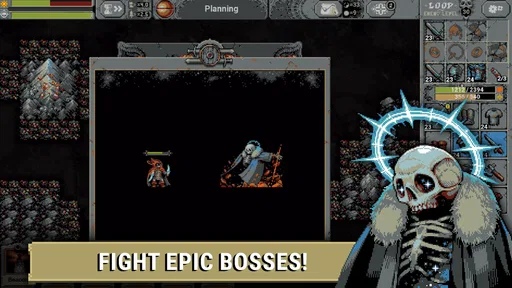
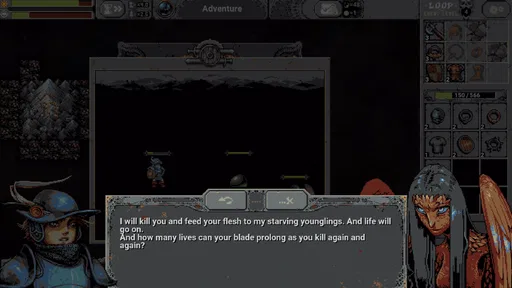
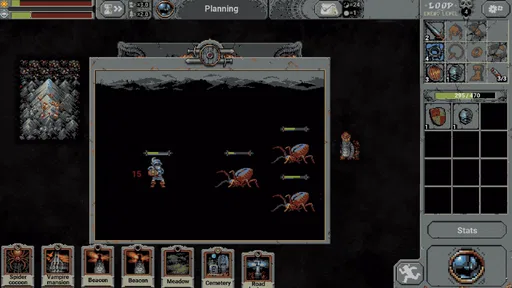
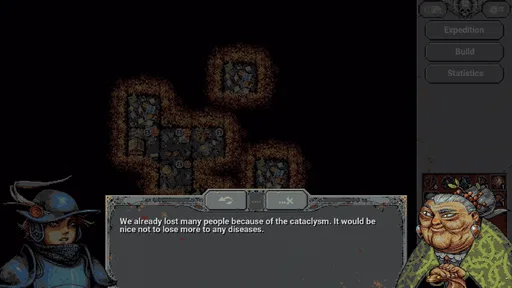
Our Review of Loop Hero
 Analysis by Appyee
I spent time with Loop Hero as a game for short sessions, shared devices, and players who enjoy making decisions more than directly controlling every second of combat. It is a role-playing game from Playdigious that turns a dangerous journey into a chain of choices: you shape the route, place the world around it, collect equipment, and decide when your hero should risk continuing or return with what was recovered.
That structure makes it unusually easy to fit into an ordinary day. I can begin a run while waiting for dinner, pause my attention during a conversation, and come back to a meaningful decision instead of needing a long uninterrupted campaign. The game is free to start, carries a Teen age rating, and has reached over a million installs. Its average rating sits at 4.7 from around 28 thousand ratings, which matches my impression that it has a very particular appeal: it is clever and absorbing, but it asks the player to enjoy systems, patience, and experimentation.
How Loop Hero works when several people share one device
When several people share one device, I’d agree on who owns the current run before anyone starts changing its route or equipment. That small habit keeps advice useful rather than turning a handoff into guesswork, and it gives the next player a chance to learn from the choices already made. I’d also consider whether everyone is comfortable with the same level of risk, since that can shape how a shared session unfolds.
A good game for taking turns, not for playing together
In a shared household, I would treat Loop Hero as a turn-taking game rather than a multiplayer activity. One person can make a few choices, hand the device to someone else, and explain what the hero is doing without losing the thread. That works better than many action role-playing games, where another player watching has little to contribute unless they are holding a controller.
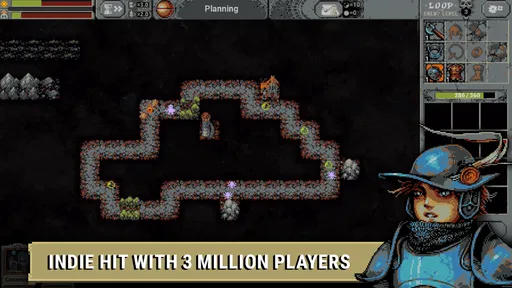
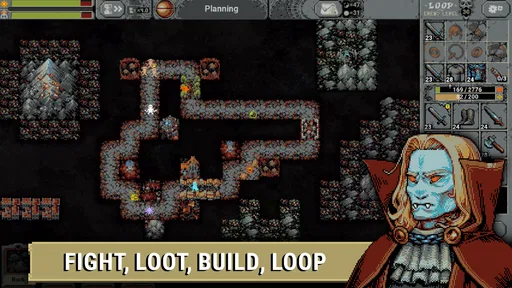
The interesting part is that the player is not simply steering a character through a fixed level. The hero follows a loop automatically, while the player controls much of the situation around that path. Cards and rewards gradually create a landscape filled with useful opportunities and dangerous enemies. Because the route keeps repeating, another person can understand the current problem quickly: should we add a card that improves future rewards, or avoid making the next circuit too difficult?
I found this particularly practical on a household tablet or phone. A child or younger teenager can watch the visual changes, while an older player can explain why a seemingly helpful building may create a harder fight. A partner can suggest which equipment to keep, and the person holding the device can make the final choice. It feels closer to discussing a puzzle than watching someone grind through a conventional role-playing game.
An everyday session has a natural stopping point
One realistic use case is a short evening session after chores. I might start a run, let several loops unfold, compare new equipment, and then decide whether to retreat before the hero is overwhelmed. That last decision matters because continuing can produce better rewards, but losing too much progress is painful. The game gives a small household conversation a clear subject: take the safe return now, or gamble on one more circuit?
This also means I would not hand the device to someone else in the middle of an important decision without explaining the situation. The game may look calm because combat largely unfolds on its own, but the strategic consequences are active. A casual tap can change the difficulty of the route, alter the available rewards, or make a later encounter much less manageable.
For a family that wants a game everyone can play simultaneously, this is the wrong expectation. There is no reason to approach it as a shared real-time adventure. Its strength is that it supports conversation and observation around one player’s run. If the goal is cooperative action, a conventional multiplayer role-playing game will be a better fit.
Why the automatic loop is more strategic than passive
At first, automatic movement can seem as though the game is playing itself. I had to adjust that assumption. The loop is the framework, not the whole game. My job is to decide how much pressure to add, how to use the cards I draw, which equipment improves the current build, and when a run has become too risky.
That design creates a useful household boundary: the person playing does not need constant physical control, but they do need ownership of the decisions. Someone watching can offer advice, yet the player should understand the consequences before accepting it. This is especially important when a younger player is involved, because the game’s most valuable lessons come from seeing how small choices accumulate over several loops.
Setting boundaries, coordinating progress, and judging the age fit
I’d set purchase approval and play-time expectations separately: a run can be absorbing even when the device is needed for something else, and optional purchases should be a deliberate household choice. The Teen rating is a useful starting point, but I’d still consider the individual player’s comfort with the game’s darker tone and combat. Those boundaries make it easier to judge whether its strategic challenge is a good fit.
Keep the game’s decisions separate from the device owner
Loop Hero does not need to dominate a shared device. Its run-based structure makes it easier to agree on a simple routine: one person plays until a run ends or reaches a sensible return point, then another person gets a turn. I prefer this to passing the phone back and forth every few minutes, because the game’s planning becomes clearer when the same player can see a decision through.
If the device belongs to a parent, I would also make the account boundary clear before anyone starts. The game is free, but it includes in-app purchases priced from $0.49 to $3.89 per item. That is not a reason to avoid the game, yet it is a reason to decide who is allowed to approve purchases on a shared phone or tablet. The practical rule is simple: a child can play, but purchases should remain an adult decision unless the household has agreed otherwise.
I would not assume that sharing a device means sharing every form of progress or preference. Different players may value different strategies. One person may enjoy building a high-risk route for better rewards, while another prefers a steady run that returns safely. If several people use the same installation, talking about whose run is active prevents accidental changes and reduces arguments over whether a difficult decision was intentional.
Coordination matters because experimentation is part of the game
The best way to coordinate is to describe the current goal before making a change. Are we trying to survive longer, collect a particular kind of resource, improve equipment, or unlock a new direction? Without that context, advice becomes vague. I found that the game rewards explanations such as “we need a safer route for this run” more than comments like “that card looks good.”
One of my favorite practical habits is to treat each run as a test. Instead of trying to discover a perfect strategy immediately, I can change one part of the route, observe the result, and remember what caused trouble. This is a stronger approach than placing every attractive option at once. The game can become difficult when the player confuses more activity with better progress.
That lesson is useful when playing with someone less experienced. I would let a younger player choose one or two placements, then ask what they expect to happen. If the result is bad, the failure becomes understandable rather than frustrating. The game’s loop structure makes this teaching process manageable because the consequences often appear over repeated passes instead of arriving as an instant reflex challenge.
Three techniques that improved my runs
First, I stopped treating every available card as an obligation. A card can be useful in isolation and still be harmful at the current moment. If the hero is already struggling, adding another source of danger simply because it offers a future benefit may turn a promising run into a recovery exercise. I now ask whether the route can handle the next few loops before chasing a reward.
Second, I compare equipment by the shape of the run, not only by its largest number. A stronger-looking item is not automatically the best choice if it supports a style that does not match the enemies or the route I have created. I pay attention to consistency: an item that keeps the hero effective across several encounters can be more valuable than a flashy upgrade that only helps in a narrow situation.
Third, I use retreat as a strategic action rather than a sign of failure. The temptation to continue is one of the game’s central pressures. A run that is already profitable can become wasteful if I insist on one more loop without a clear reason. Returning with a sensible amount of progress gives me resources for future attempts and preserves the information learned from the current route.
Teen rating and household trust
The Teen content rating is worth taking seriously when deciding who should play. I would not present this as a preschool game simply because the controls are approachable. The setting, combat, and darker atmosphere are aimed at an older audience, and some younger players may find the presentation or themes uncomfortable even if they can understand the mechanics.
For a teenager, I think the game can be a good choice when the household is comfortable with its tone and with the player managing risk independently. It encourages planning, delayed rewards, and learning from failed attempts. Those qualities make it more thoughtful than a game built only around quick reactions, but they can also make it frustrating for someone who wants immediate success.
Trust still matters more than the age label alone. I would explain that the game is free to start but includes optional paid items, then set the household rule before installation or play begins. I would also agree on when a run should end, especially if the device is shared for homework, communication, or other daily tasks. The game’s absorbing loop makes “one more attempt” easy to say and harder to keep brief.
What the current mobile version feels like
The current version is 1.0.5, and the game supports devices running Android 9 or later. I experienced it as a focused mobile adaptation rather than a stripped-down distraction. The interface is built around inspecting the route, reading item details, and making deliberate choices, so a larger screen can make shared viewing more comfortable. On a phone, the experience is still workable, but small text and dense information deserve more attention than they would in a simple arcade game.
That matters for household use because the person watching may not be able to read every detail from a distance. If I am explaining a decision to someone beside me, I prefer to bring the device closer and examine the relevant information together rather than making a rushed choice based on a quick glance. The game rewards that slower approach.
Who should choose it, and who should skip it
I recommend Loop Hero to players who like roguelike structure, resource management, and role-playing progression without needing direct control over every attack. It is also a strong option for someone who enjoys discussing strategy with a friend or family member while one person plays. The unusual balance between automatic movement and active planning gives it more depth than its hands-off presentation suggests.
I would skip it if you want a story-led adventure with constant character control, cinematic exploration, or straightforward battles. Players who dislike repeating routes may see the loop as monotonous rather than satisfying. It is also not ideal for someone who wants to relax without making decisions, because the game keeps asking whether the current risk is worth the possible reward.
Compared with a typical mobile role-playing game, it is less about collecting a large cast or tapping through a sequence of battles and more about building a situation that the hero can survive. Compared with a traditional roguelike, its automatic travel lowers the reflex burden but does not remove the possibility of failure. Compared with an idle game, it gives the player much more responsibility for shaping outcomes. Those differences are exactly why I find it memorable, but they are also why it will not satisfy every role-playing fan.
The cost question on a shared device
The free entry point makes it easy to try without committing immediately. I would still approach the in-app purchases carefully, especially on a household device used by more than one person. The individual prices range from $0.49 to $3.89, so a single purchase may look minor, yet repeated approvals can become a source of confusion if nobody knows who is responsible.
My advice is to decide whether the game is being evaluated for its core experience before spending anything. The strategic loop is the main reason to play, and a household should first establish whether everyone enjoys that loop. If one player likes it and another does not, paying for extras will not solve the underlying mismatch. Clear purchase permission is more useful than treating the low entry price as a reason to buy casually.
My household verdict
After using it as a mobile role-playing game and imagining it in a shared-device routine, I see Loop Hero as a surprisingly good conversation game for one player at a time. It gives observers something meaningful to discuss, supports natural stopping points, and turns failure into a lesson about risk rather than merely a lost battle. Playdigious has brought a distinctive kind of strategy to mobile, and the result feels better suited to thoughtful sessions than to mindless tapping.
My recommendation comes with clear conditions. Keep account and purchase boundaries separate from the excitement of a run. Make sure the Teen tone suits the player. Do not expect simultaneous cooperation or a conventional story adventure. Most importantly, accept that the game’s pleasure comes from planning a route, watching consequences unfold, and sometimes choosing to leave before the reward feels complete.
For the right household, that tension is the appeal. A teenager can play independently, a parent can offer advice without taking over, and two people can compare strategies after a run. For a player who wants immediate action or a simple comfort game, it may feel too demanding. I would recommend trying the free version first and judging one thing honestly: whether the act of making the loop better is more satisfying to you than controlling the hero directly.
Verdict
Strengths of Loop Hero
- Works well offline, making it suitable for travel or areas with limited connectivity.
- Runs smoothly on most modern phones without demanding high-end hardware.
- Short expedition loops make it easy to play in brief gaming sessions.
- Strong pixel-art presentation gives the game a distinctive retro atmosphere.
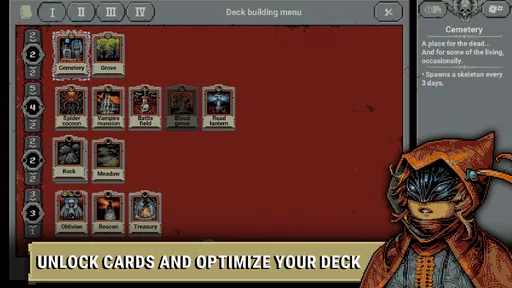
- Multiple classes and deck options encourage experimentation and replayability.
Limitations of Loop Hero
- Progress can feel slow when resource gathering becomes the main objective.
- The interface may feel cramped on smaller smartphone screens.
- Some important mechanics are explained too briefly for new players.
- Repeated runs may become monotonous before enough new content unlocks.
- The mobile version may feel less comfortable without a larger screen.
Other Releases by Playdigious
View All


Similar Picks in This Category
View All
Hair Dye
CrazyLabs LTD4.4

Monster High™ Beauty Salon
CrazyLabs LTD4.5

Bus Simulator - Bus Games 3D
Jima Apps4.4

Flight Pilot: 3D Simulator
Wildlife Studios4.1


Super Stylist Fashion Makeover
CrazyLabs LTD4.4
Frequently Asked Questions
What is Loop Hero, and how does its gameplay work?
Loop Hero is a strategic roguelike adventure where your hero travels around an automatically generated loop instead of being controlled directly. You influence the journey by placing landscape and building cards, which create enemies, resources, bonuses, and new challenges. The hero fights automatically, so your main responsibilities are planning the route, choosing equipment, managing cards, and deciding when to return safely to camp.
Can Loop Hero be played offline on Android or iOS?
Loop Hero is primarily designed as a single-player experience, and its core gameplay does not depend on real-time multiplayer or constant online interaction. However, offline availability can vary depending on the mobile version, platform requirements, updates, and how the game was installed. Before downloading, check the official store description and test the game after installation if offline access is important to you.
Is Loop Hero free to download, or does it include purchases and advertisements?
The price and monetization model for Loop Hero may differ between Android, iOS, and other supported platforms. Some versions may require an upfront purchase, while store promotions or regional pricing can change the final cost. You should review the official Google Play or App Store listing before installing to confirm whether the version includes advertisements, in-app purchases, or additional paid content.
Is Loop Hero suitable for beginners, or is it a difficult game?
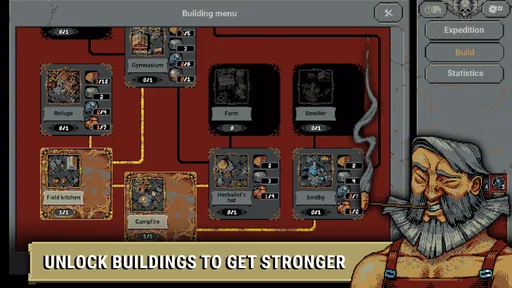
Loop Hero is accessible to beginners, but it has a learning curve because many systems work together. Early runs teach you how cards affect the battlefield, how equipment choices influence survival, and when retreating is better than taking another loop. Mistakes are expected, and permanent camp upgrades gradually make future expeditions easier. Players who enjoy experimentation and strategic planning will usually adapt quickly.
Does Loop Hero require a powerful phone or tablet to run smoothly?
Loop Hero uses pixel-art visuals and generally does not appear to require high-end hardware, making it suitable for many modern Android and iOS devices. Smooth performance can still depend on your operating system, available storage, background processes, and the specific mobile port. Check the app’s current system requirements before downloading, especially if you use an older phone or tablet.
Play our best games!


